FBX / BVH
Beat Gesture
Melisa Allela
gesturestorytellingbeat
The Couple (Biomechanical Unit) The gesture fuses two skeletons into a single center of gravity. The baby is positioned dorsally, with their chest pressed against the caregiver’s back. The baby’s legs are typically abducted (spread wide) in a straddle position, wrapping around the caregiver’s waist or ribs, often referred to as the ergonomic “M-position.”
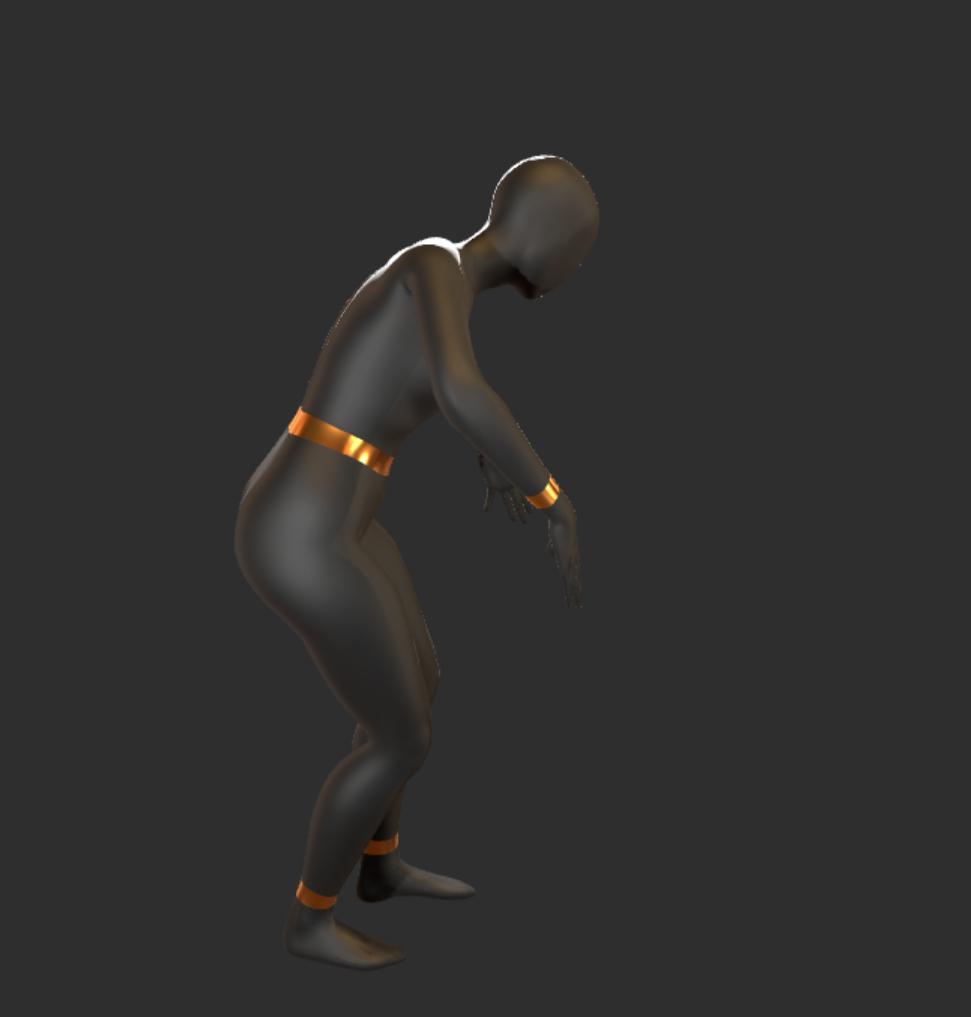
The Caregiver (The Counterbalance) To support the additional posterior load, the caregiver adopts a compensatory lumbar arch (lordosis). The pelvis tilts slightly forward, and the torso leans imperceptibly forward to bring the combined center of mass over the feet. This creates a distinct, grounded gait where the steps are often wider and more deliberate to ensure stability.
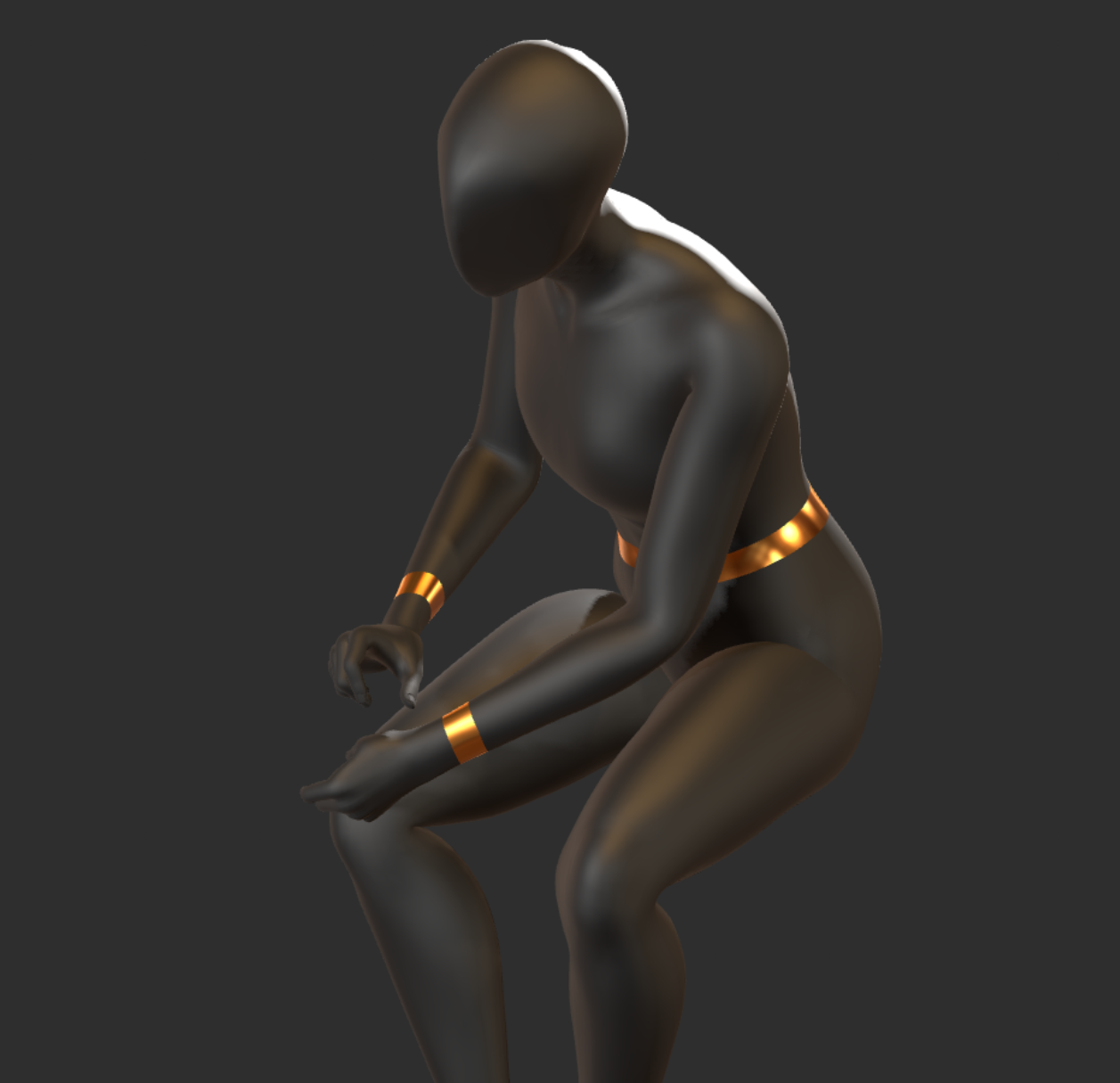
The Adjustment (The Hoist) A key micro-movement involves the caregiver bending forward sharply at the waist (nearly 90 degrees) to “hoist” the baby higher up the back before tightening the kanga or leso (fabric) across the chest or waist.
The Sibling Carry (High Mount): Younger caregivers (often older siblings) tend to carry the infant higher on the thoracic spine. Due to their lower body mass relative to the load, their posture remains more vertical to prevent posterior destabilization.
The Matriarch Carry (Deep Settle): Experienced caregivers often settle the infant lower in the lumbar curve. The posture exhibits a more pronounced, relaxed arch, indicating a musculoskeletal adaptation to the load over time.
Regional Wrapping Techniques: Specific distinct binding methods (e.g., the Kikoy wrap vs. the Kanga knot) may alter the precise focal point of pressure on the caregiver’s torso, subtly influencing the degree of forward lean required.
CC0 (Public Domain)